
Why go
Pilaf came to Xinjiang along the Silk Road and stayed. The Uyghur version uses mutton or lamb, carrots — orange, and in the best kitchens yellow — and plenty of onion, all layered under rice and steamed slowly in the meat's own fat. The grains emerge separate, golden, and quietly perfumed.
It is festive food: served at weddings and family gatherings in a single enormous platter, with the meat arranged on top and everyone eating from the same mound. A good bowl is rich but never heavy, the sweetness of the carrots cutting the lamb's richness.
- The best pilaf is made with fatty lamb tail or mutton and yellow carrots
- Eat it by hand — roll a small ball and pop it in — for the full experience
- Huge portions; a single plate is often a full meal
- Add a cup of yoghurt or a slice of naan bread to balance the richness
Ordering and eating
A standard plate costs 25–40 RMB and includes rice, a generous bone-in lamb chop and a piece of naan. Ask for a piece of lamb tail fat if you want it richer. Traditionalists rinse their right hand, gather a small handful, and roll it into a ball before popping it in — do this and you will earn nods from the table next to you.
Where to go
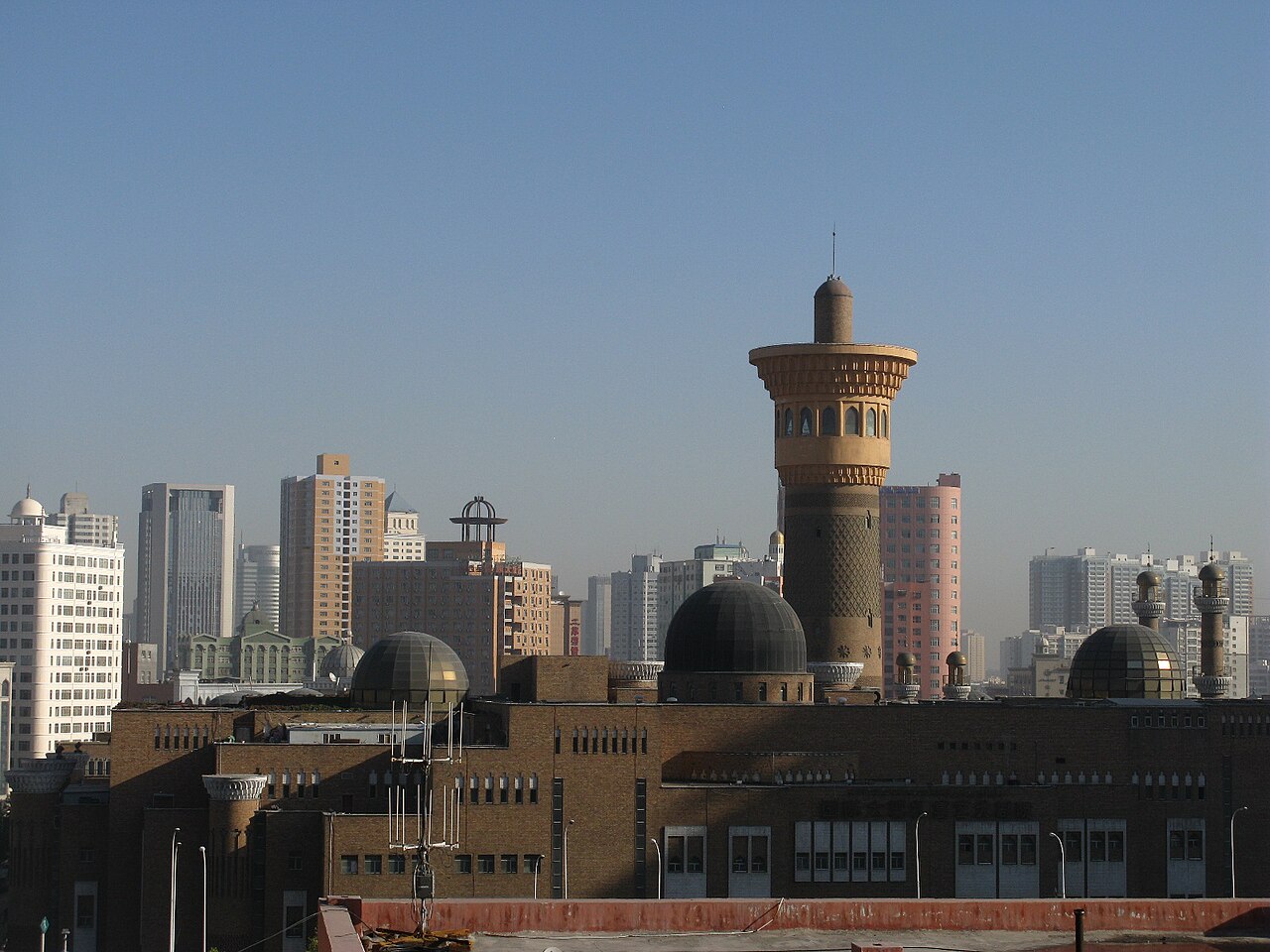
Urumqi's most reliable pilaf is found at old Uyghur houses near the Grand Bazaar and Erdaoqiao. Follow the lunch rush of workers and you cannot go far wrong. Some spots add raisins and dried apricots in the sweeter Kashgar style. Pair with a glass of home-made yoghurt to cool the meat's richness.
Getting there
- In Urumqi, head to the Xinjiang International Grand Bazaar or the streets around Erdaoqiao for classic pilaf houses
- Base
- Long-grain rice cooked in lamb fat
- Signature toppings
- Mutton, carrot, onion
- Price
- 25–40 RMB a plate