
Why go
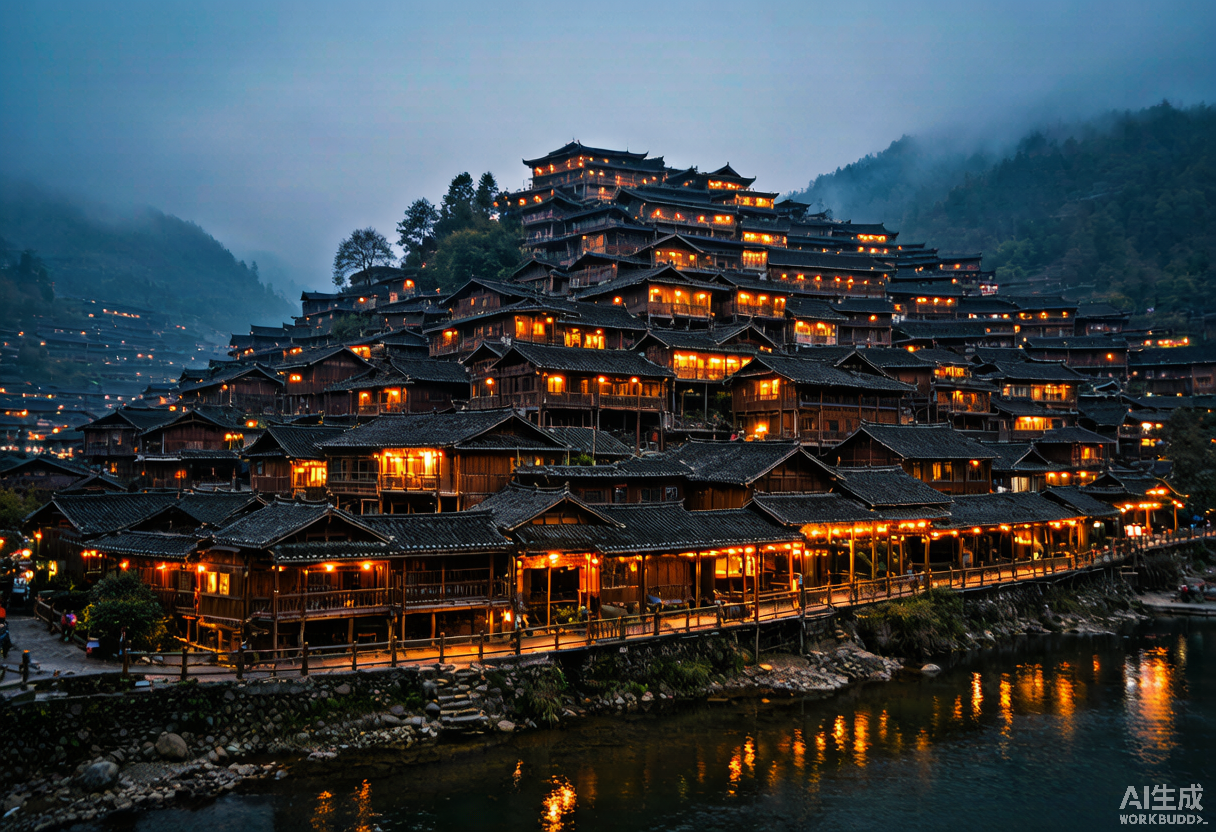
Fenghuang grew along the Tuo River as a military post and trading town in western Hunan, home to the Miao and Tujia peoples. The architecture that defines it — wooden stilt houses wedged into the riverbank, black-tiled roofs, stone bridges — survives intact along the two banks.
The town's fame owes a lot to the writer Shen Congwen, whose 1934 novel 'Border Town' painted its rivers and ferry crossings. Expect crowds and souvenir noise on the main streets; the reward is the river itself, which looks extraordinary at dawn and after dark.
- The stilted houses of the north bank reflected in the Tuo River
- Rainbow Bridge (Hongqiao) and its covered upper gallery
- A lantern-lit boat ride after dark
- Shen Congwen's former residence and the East Gate tower
Where to go
Walk the north bank from the East Gate to Rainbow Bridge, then cross to the south bank for the classic postcard view of the stilt houses. The night scene is the main event — the town is floodlit, and a short boat ride on the Tuo River gives the best angles.
Practical notes
Arrive early in the day: daytime is for the heritage houses and the Miao silver workshops; dusk to midnight is for the river. The South China Great Wall, a Ming border fortification, lies an hour away if you want a quiet day out. Accommodation books out on Chinese holidays.
Getting there
- High-speed rail to Huaihua South or Jishou East, then bus or taxi ~1h
- Direct train to Fenghuang station then a short shuttle
- Age
- Ming-dynasty origins
- People
- Miao + Tujia culture
- Literary fame
- Shen Congwen's 'Border Town'