
Why go
The Dong people of the Guangxi–Guizhou–Hunan borderlands developed a distinctive building tradition: covered bridges called 'wind-rain bridges' that shelter travellers from the mountain weather. Chengyang Yongji Bridge, built in 1916, is the finest surviving example.
The bridge stretches 64.4 metres across the Linxi River in five spans, each carried by a timber frame and topped by a multi-eaved pagoda pavilion. The deck is a covered corridor with benches along both sides — still used daily by villagers crossing to the fields.
- Five pagoda-like pavilions rising above a single timber deck
- The mortise-and-tenon joinery — no nails hold the structure together
- Dong village of Chengyang Ma'an寨 around the bridge
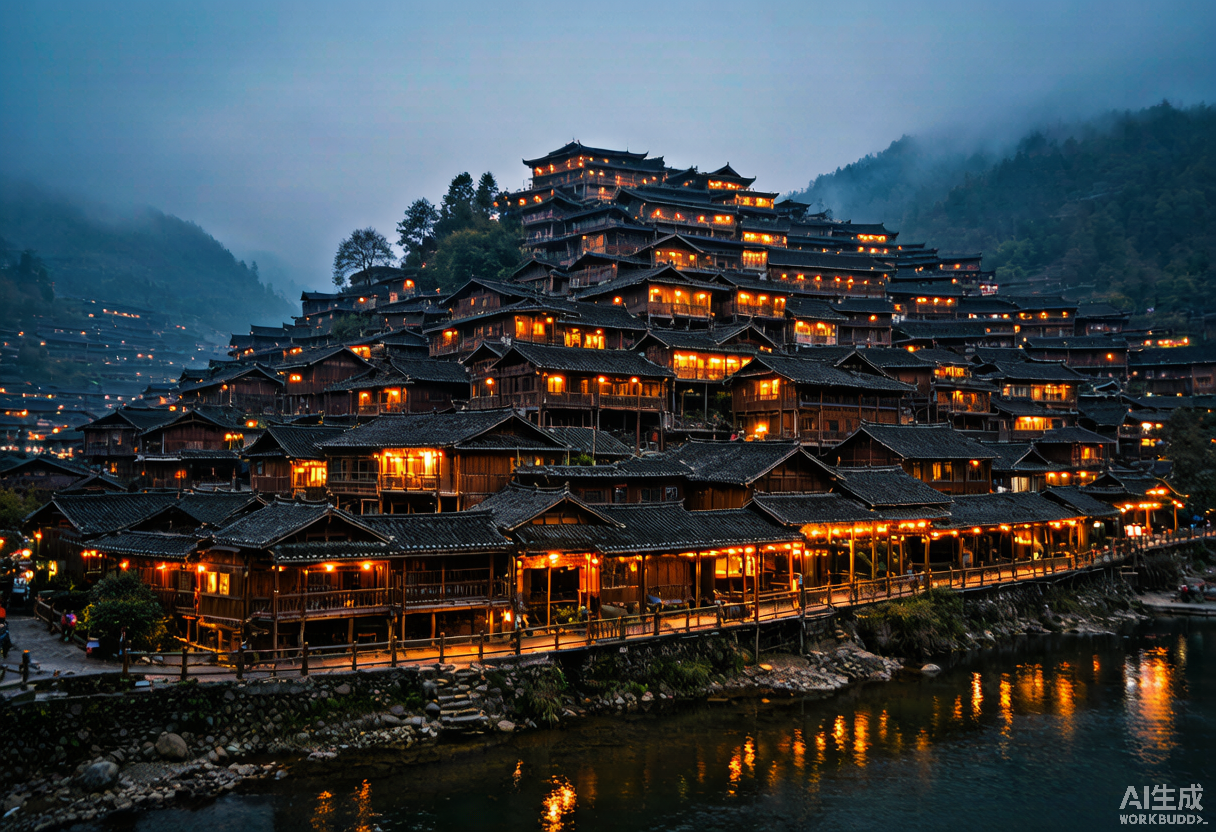
- The drum tower and stilt houses in the nearby village
What to see
Walk the full length of the bridge slowly — the five pavilions, each with a different roof profile, create a rhythmic skyline. Stop on the benches to read the inscriptions and watch villagers carrying baskets and water buffalo passing under the eaves.
Climb to the viewing platform on the north bank for the classic postcard view of the bridge with the Dong village of Ma'an behind it. Then explore the village — its drum tower, stilt houses (diaojiaolou) and stone-paved lanes.
If a Dong choir is performing, do not miss it: the polyphonic singing tradition is a UNESCO intangible heritage.
Practical notes
Chengyang is best as part of a northern Guangxi or eastern Guizhou trip — the drive from Guilin takes about three hours. Stay overnight in a village guesthouse to see the bridge lit at night and to hear evening singing from the drum tower.
Getting there
- Bus from Sanjiang County to Chengyang (30 min)
- High-speed train to Sanjiang South Station, then bus
- Built
- 1916 (Qing/early Republic)
- Length
- 64.4 metres, five spans
- Construction
- Mortise-and-tenon, no nails