
Why go
Legend says Emperor Ming of the Eastern Han dreamed of a golden man flying from the west. He sent envoys who returned with two monks and white horses carrying Buddhist scriptures. The temple was built to house them, and the first Chinese Buddhist community took root here.
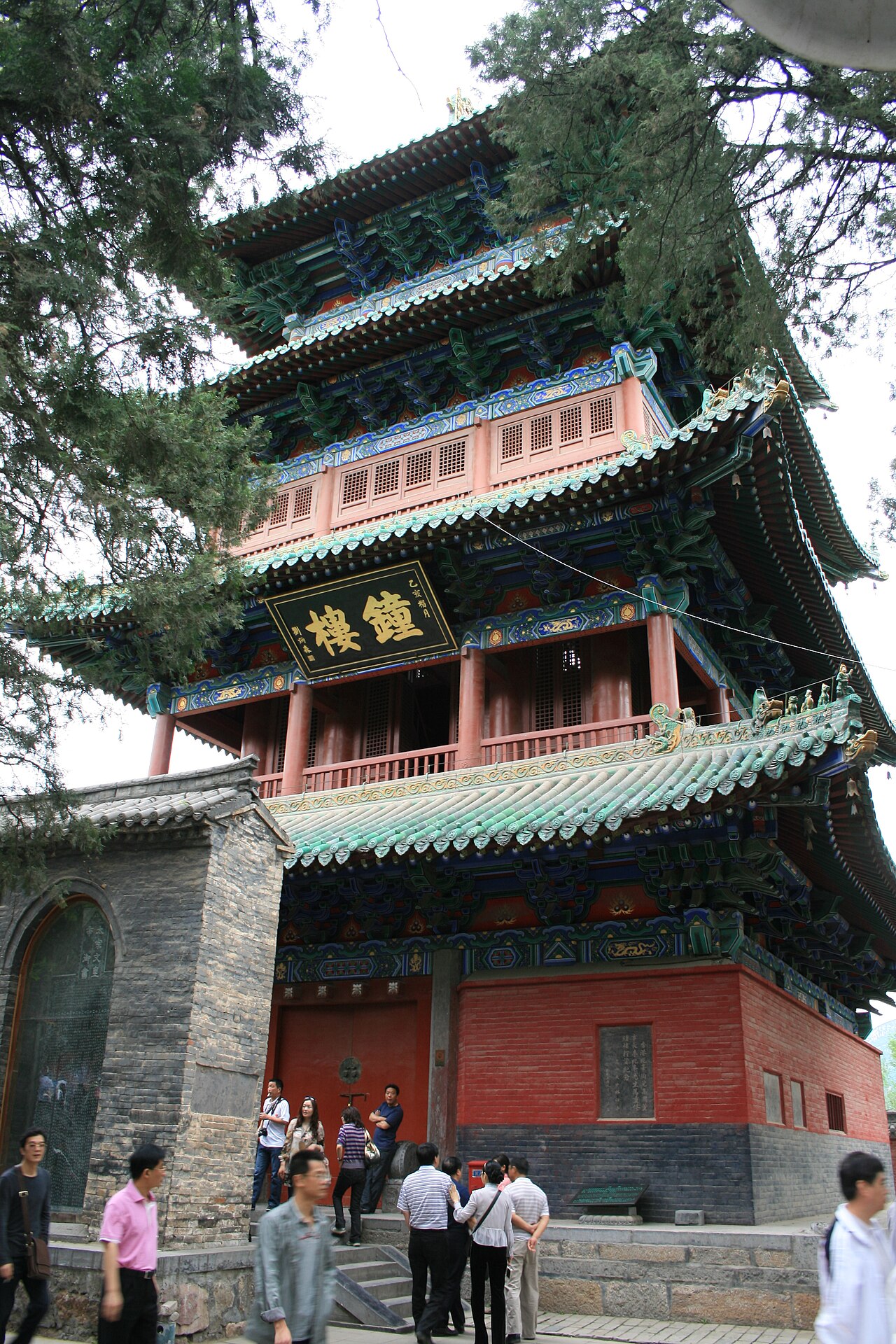
Though rebuilt many times — the current structures are mostly Ming and Qing — the layout preserves the early Chinese temple pattern: a central axis of halls with bell and drum towers flanking the entrance.
- The Hall of Heavenly Kings with its laughing Maitreya
- The Hall of the Great Hero — main shrine with Sakyamuni
- The Qiyun Pagoda, one of China's earliest surviving brick pagodas
- International temple halls — Thai, Indian and Myanmar style replicas
What to see
Walk the central axis from the entrance through the Hall of Heavenly Kings to the Hall of the Great Hero, where a triad of gilded Buddhas sits beneath an ornate ceiling. Behind it, the Hall of Guidance and the清凉 Pavilion mark where the first translation work is said to have taken place.
East of the main complex, the international garden area holds full-scale replicas built by Thailand, India and Myanmar — each in authentic national style, making this the only Chinese temple where you can see four national architectures side by side.
The 13th-century Qiyun Pagoda stands just outside the east wall — a five-storey brick tower and one of the few surviving structures from the Jin dynasty.
Practical notes
Allow extra time for the international temple area — many visitors miss it by walking only the central axis. The peonies in the courtyard bloom in mid-April and pair well with a Luoyang Peony Festival visit.
Getting there
- Bus 56 or 58 from Luoyang Railway Station (30 min)
- Taxi from Luoyang city centre (20 min)
- Founded
- 68 CE (Eastern Han)
- Significance
- First Buddhist temple in China
- Key relic
- Qiyun Pagoda (Jin dynasty, 1175)