
Why go
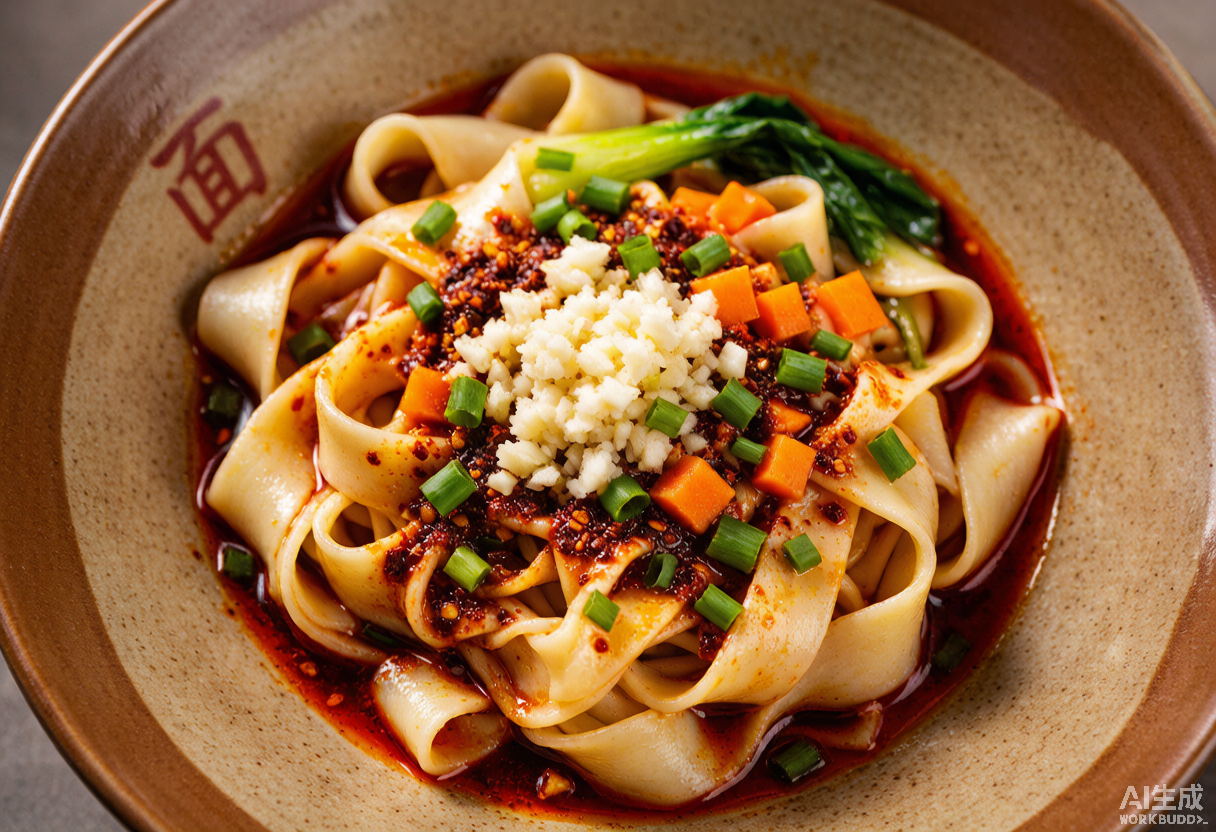
The bowl is a study in contrasts: thick, chewy noodles against a thin, spicy oil; sharp black vinegar against mellow garlic. The chilli is not mouth-burningly hot in the Sichuan sense — it is aromatic and warm, a heat that creeps in slowly and then lingers pleasantly.
Shaanxi food is bread-and-noodle country: honest, hearty and built on wheat. Biangbiang noodles, with their theatrical preparation, are its most famous ambassador.
- The noodles are cut wide by hand and slapped — that's the 'biang'
- Order you po (oil-poured): hot oil hits dried chilli and garlic at the table
- Add a soft egg and extra vinegar to cut the richness
- The biang character has 58 strokes — the hardest to write in Chinese
How it's built
Watch the order of operations: the noodles are blanched and drained, then stacked with soy sauce, black vinegar, minced garlic and a generous heap of dried chilli flakes. A ladle of smoking oil pours over the top, and the sizzle is the whole dish — it blooms the chilli into a deep, smoky fragrance. Add the fried egg, eat fast, drink something cold.
Where to try it
Look for shops with a visible hand-pulling station — the slap is a good sign. The Muslim Quarter has many; locals argue about the best, but any busy shop with a queue of students is a safe bet. Pair with a bowl of liangpi (cold skin noodles) if you're still hungry, and a glass of local sour plum drink to reset the palate.
Getting there
- Biangbiang houses cluster near the Muslim Quarter's edges and the Beiyuanmen food street
- Name
- Biang — onomatopoeia of the dough slap
- Style
- Oil-poured (you po) with chilli
- Pairing
- Best with cold noodles (liangpi)