

Why go
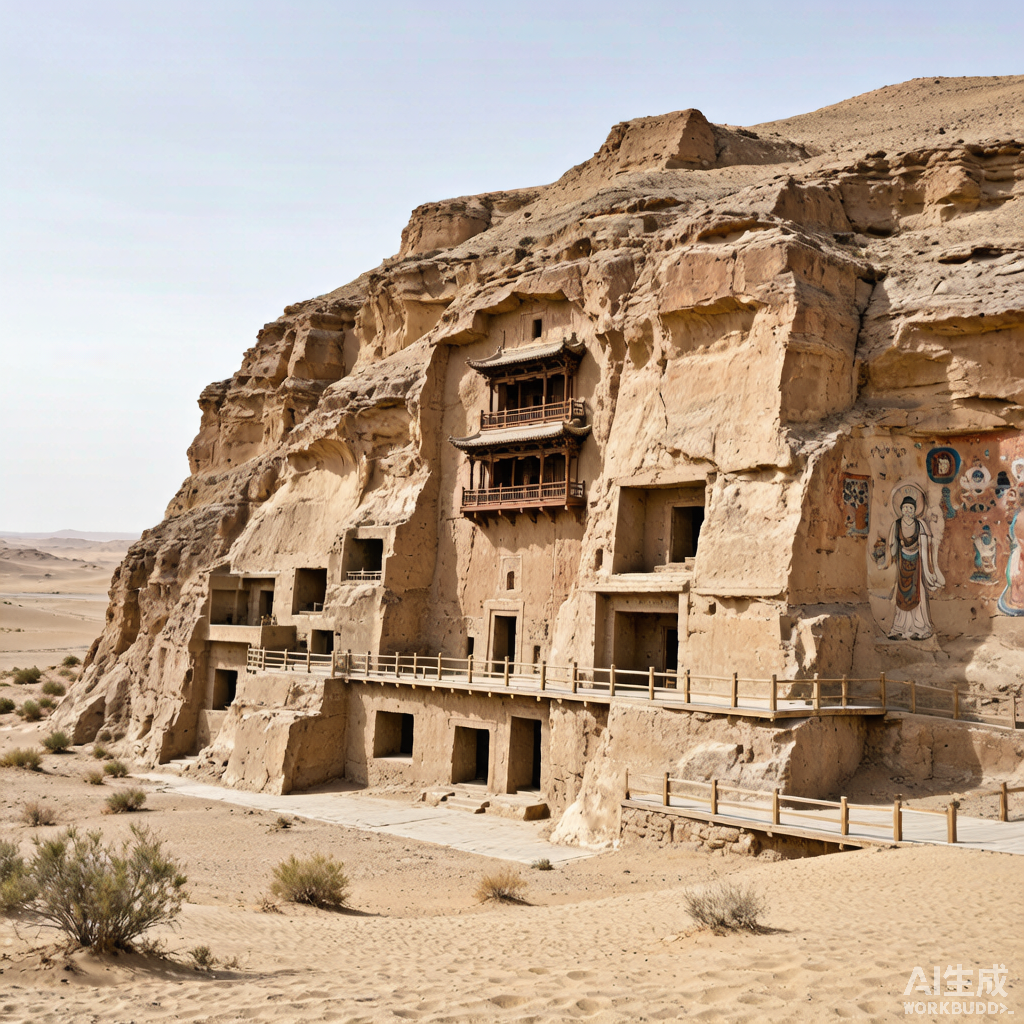
The caves themselves are dark, cramped, and strictly time-limited — a guide leads small groups through a handful of caves with a torch. The academy's exhibition spaces let you slow down: exact replica caves, blown-up mural photography, and the story of how a desert cliff became one of the world's great art archives.
- Full-scale replica caves, allowing unlimited time with the murals
- Exhibits on the Library Cave manuscripts and their global dispersal
- Conservation labs showing how the murals are being saved from sand and salt
- Founded 1944 — China's oldest dedicated heritage research institute
What to look for
The replica caves reproduce famous interiors — including several now closed to visitors — at full scale and full colour, letting you examine flying apsaras and thousand-Buddha motifs at leisure. The Library Cave exhibition explains the 1900 discovery of 50,000 manuscripts, their removal by Stein and Pelliot, and where the scrolls live today. Conservation displays show the salts and sands threatening the murals, and the painstaking techniques the academy has developed over eight decades.
Plan your visit
Your Mogao ticket includes two films at the digital exhibition centre — watch them; the second, a circular-screen fly-through of the caves, is genuinely beautiful. Then take the shuttle to the cliff for the guided cave tour, and finish in the exhibition halls. Booking in advance is essential in summer, and photography inside caves is forbidden. For deeper study, the academy also runs exhibitions in its Dunhuang Gallery in town.
Getting there
- Shuttle buses run from the Mogao Caves digital exhibition centre (north of Dunhuang town) to the cliff site; the academy's exhibition spaces are part of this complex
- Founded
- 1944
- Role
- Conservation and research of the Mogao Caves
- Key exhibit
- Replica caves and Library Cave story