
Why go
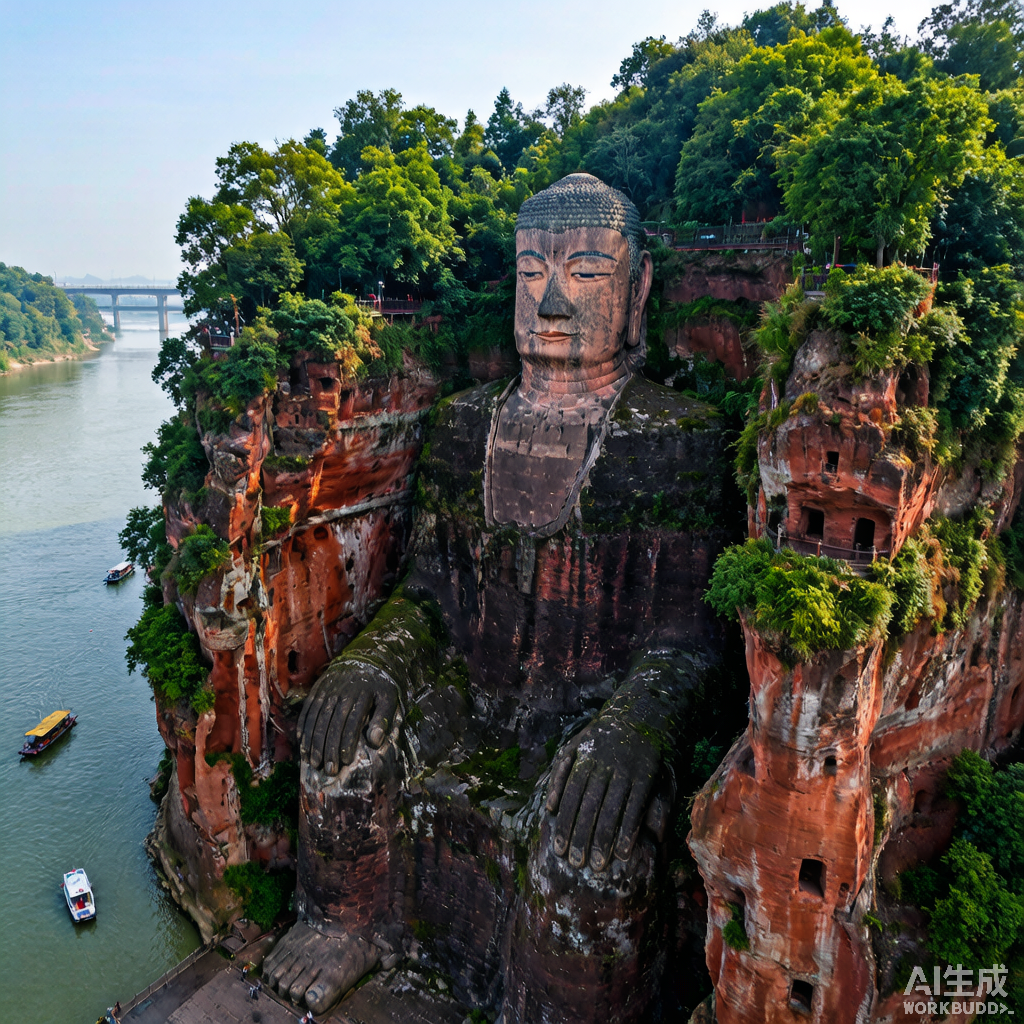
A monk named Haitong spent 20 years collecting donations to carve the Buddha, believing the stone giant would slow the dangerous confluence of the Min, Dadu and Qingyi rivers. When he died, work paused — until a governor funded its completion in 803 CE.
The engineering is remarkable: the Buddha's 1,021 hair buns drain rainwater, and the carved gutters in the robes channel runoff away from the stone. It has survived 1,200 years of floods.
- The boat ride across the river for the full-scale view
- The 90-minute descent staircase beside the Buddha's ear
- The drainage system hidden in the Buddha's hair and robes (still working)
- The Tang-era red cliff behind the statue
Practical tips
The land route is a one-way cliff staircase — queues can stretch two hours in season. Go early or take the boat. The boat (30 minutes, ~¥70) is the only way to appreciate the scale; the statue is taller than a 20-storey building.
Nearby
Leshan combines perfectly with Mount Emei: the Buddha in the morning, the mountain overnight. The statue is a 20-minute taxi from Leshan station.
Getting there
- High-speed rail from Chengdu to Leshan (~1h), then a 20-min taxi
- Height
- 71 m
- Age
- Completed 803 CE
- Status
- UNESCO (with Mount Emei)