
Why go
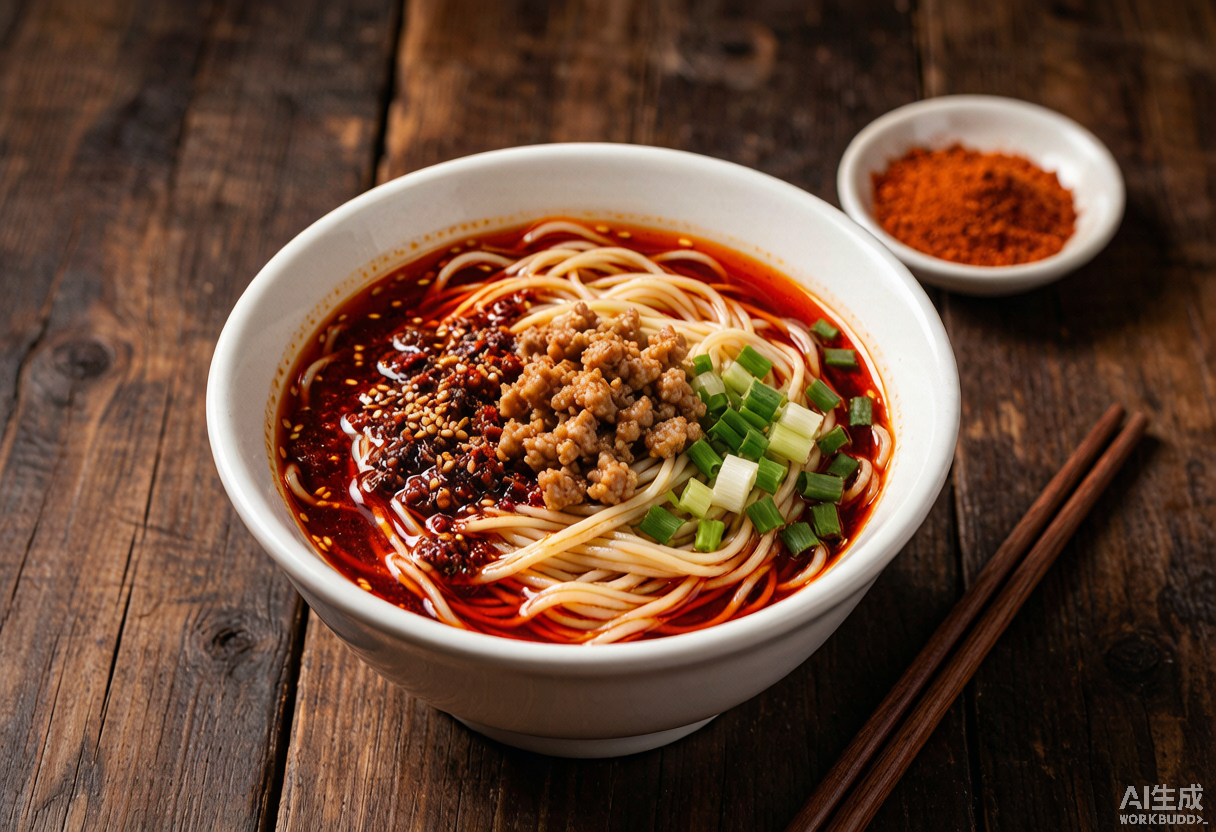
It looks simple — a modest bowl of noodles painted red — but the flavour is layered: nutty sesame, sharp vinegar, garlic, a hint of peanut, and that distinctive numbness creeping in at the end. Locals judge a shop by the balance.
Chongqing people eat it at dawn, at midnight, and everywhere in between. The best shops are tiny, loud and busy, with a wok of boiling water and a stack of chilli jars.
- Order gan (dry) style with a fried egg on top
- The magic is the chilli oil — every shop guards its recipe
- Two bowls is a normal breakfast order
- Sichuan pepper gives the numbing finish locals crave
Ordering like a local
Say er liang (two liang — a small bowl) or san liang (large). Most people order gan (dry, no soup) over tang (soup) style. Add a jia dan (fried egg) and perhaps zha jiang (minced pork) for a richer bowl. If you want it gentle, say wei la — but expect a raised eyebrow from the cook.
Where to go
Follow queues of office workers, not tourist lists. The famous shops near the Jiefangbei pedestrian zone are good but have long waits; a busy corner stall with a boiling pot and a bench is the real thing. Pair with a cold soy milk to cut the heat, and order a second bowl if the first disappears too fast.
Getting there
- Xiaomian shops are everywhere; classic spots cluster near the Jiefangbei area and local markets
- Base
- Thin wheat noodles
- Star ingredient
- House-made chilli oil
- Style
- Dry (gan) or soupy (tang)