
Why go
The meal is a slow morning ritual. The table fills with bamboo steamers, you pour tea for each other — tapping fingers thanks the pourer — and the conversation runs longer than the food. Order in waves, not all at once; the kitchen works in small batches.
Guangzhou is the home of dim sum, and Cantonese emigrants carried it to Hong Kong, London, Sydney and beyond. But the original teahouse culture — loud, generous, deeply ritualised — is still best experienced here.
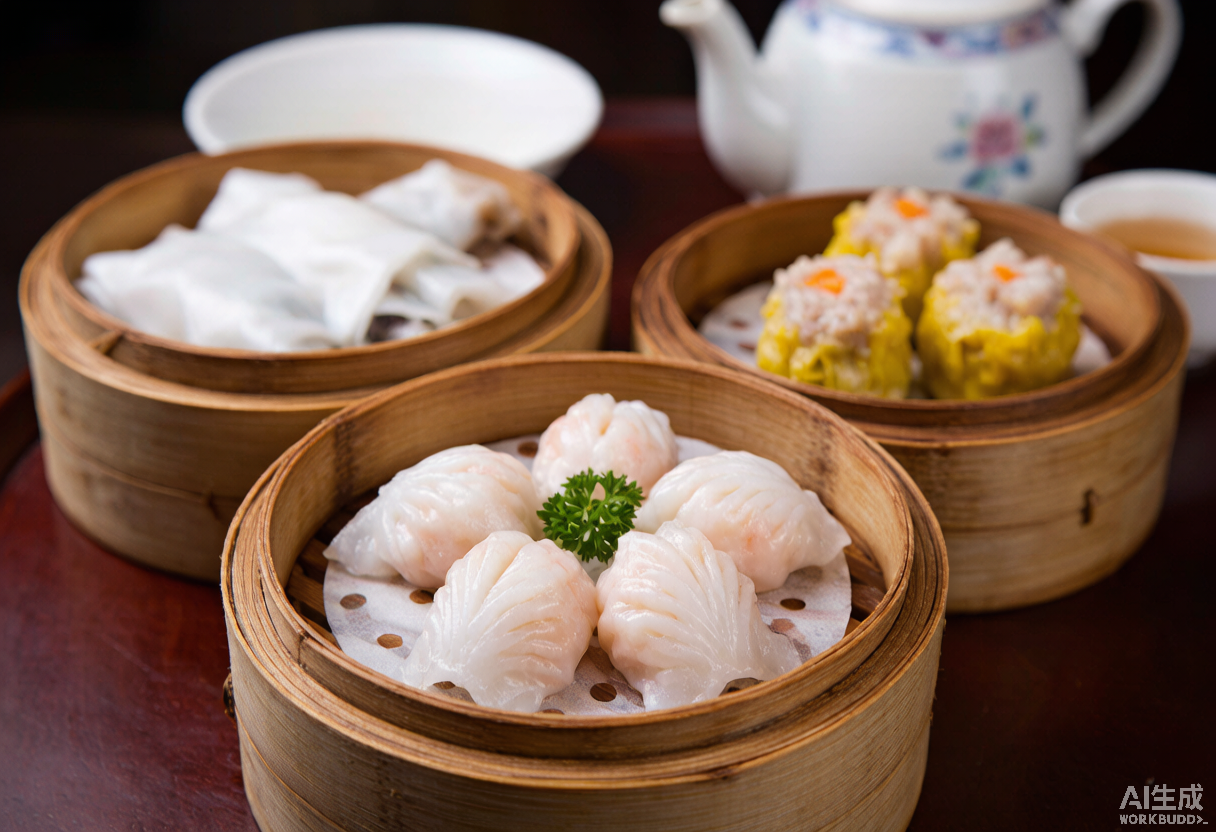
- The classic spread: har gow, siu mai, char siu bao and cheong fun
- It's called yum cha — 'drinking tea' — for a reason; the tea is the point
- Trolley service is fading; order from the menu card instead
- Go with a group so you can order more plates
The essentials
Order har gow (shrimp dumplings) and siu mai first — these two measure a kitchen's skill. Add char siu bao (barbecue-pork buns), cheong fun (rice rolls) with soy, and a turnip cake for contrast. Finish with egg tarts. For courage, ask for chicken feet (feng zhua) — a southern classic that turns sceptics into converts.
Tea and etiquette
The tea is not a side; it is the point. Pick pu-erh, oolong or chrysanthemum. When someone refills your cup, tap two fingers on the table in thanks. When the lid is off your teapot, the server knows it needs more water. Tipping is not expected. The meal ends when the tea runs weak — then you settle and go.
Getting there
- Classic teahouses sit in the Liwan old town around Xiguan; most big hotels run upmarket halls
- Name
- Dim sum — 'touch the heart'
- Ritual
- Yum cha — morning tea with small plates
- Test dishes
- Har gow and siu mai