
Why go
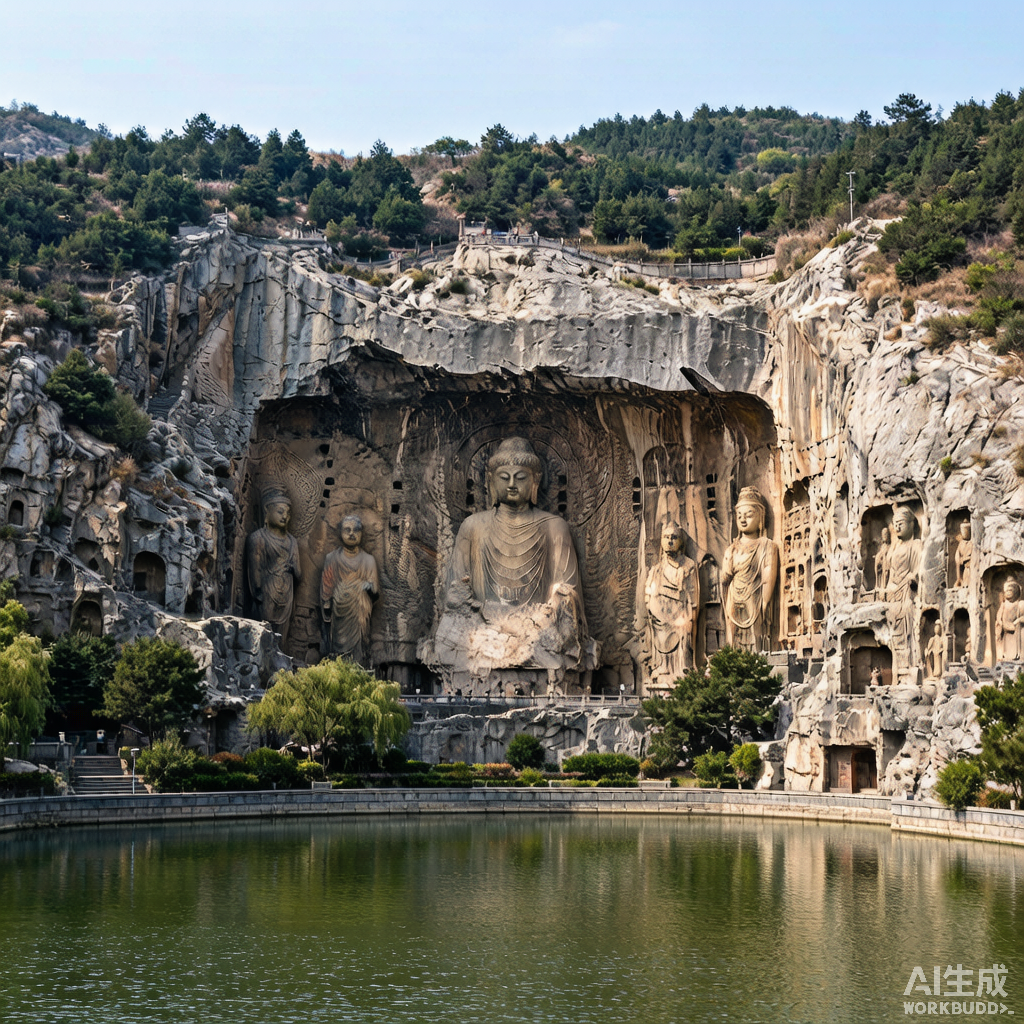
The grottoes began in 493 CE when the Northern Wei court moved its capital to Luoyang and its sculptors to this cliff. Tang emperors continued the work, funding the great Fengxian group to be carved in their own likenesses.
The site reads as a history of Chinese sculpture: the slender, smiling figures of the Wei, the grand and fleshy Buddhas of the Tang, and the vandalised fragments of the 20th century.
- The Vairocana Buddha and its attendant bodhisattvas (Tang, 672 CE)
- The Binyang caves and the Fengxian temple cliff
- Crossing the bridge for the panorama of the entire cliff
- The illuminated night visits in high season
Practical tips
The route is one-way along the river: cross the bridge first for the far-bank view, then walk the west cliff and take the boat back. Carry water — the cliff path is exposed. The walk is long but the gradient is gentle.
Nearby
Luoyang is also the home of the White Horse Temple (China's first Buddhist temple) and the peony festival each April. It combines easily with a Xi'an–Beijing rail itinerary.
Getting there
- High-speed rail to Luoyang Longmen station, then a 15-min taxi
- Caves
- 2,345 niches and caves
- Figures
- ~100,000 statues
- Status
- UNESCO World Heritage (2000)