
Why go
The artefacts suggest a civilisation as sophisticated as the Shang dynasty, yet entirely distinct. Nobody knows who they were, what they believed, or why their treasures were deliberately buried in ritual pits.
Since 2020, new excavations have kept the site in headlines: more masks, more gold, and more questions. This is archaeology happening right now — and you can watch the dig from a viewing platform.
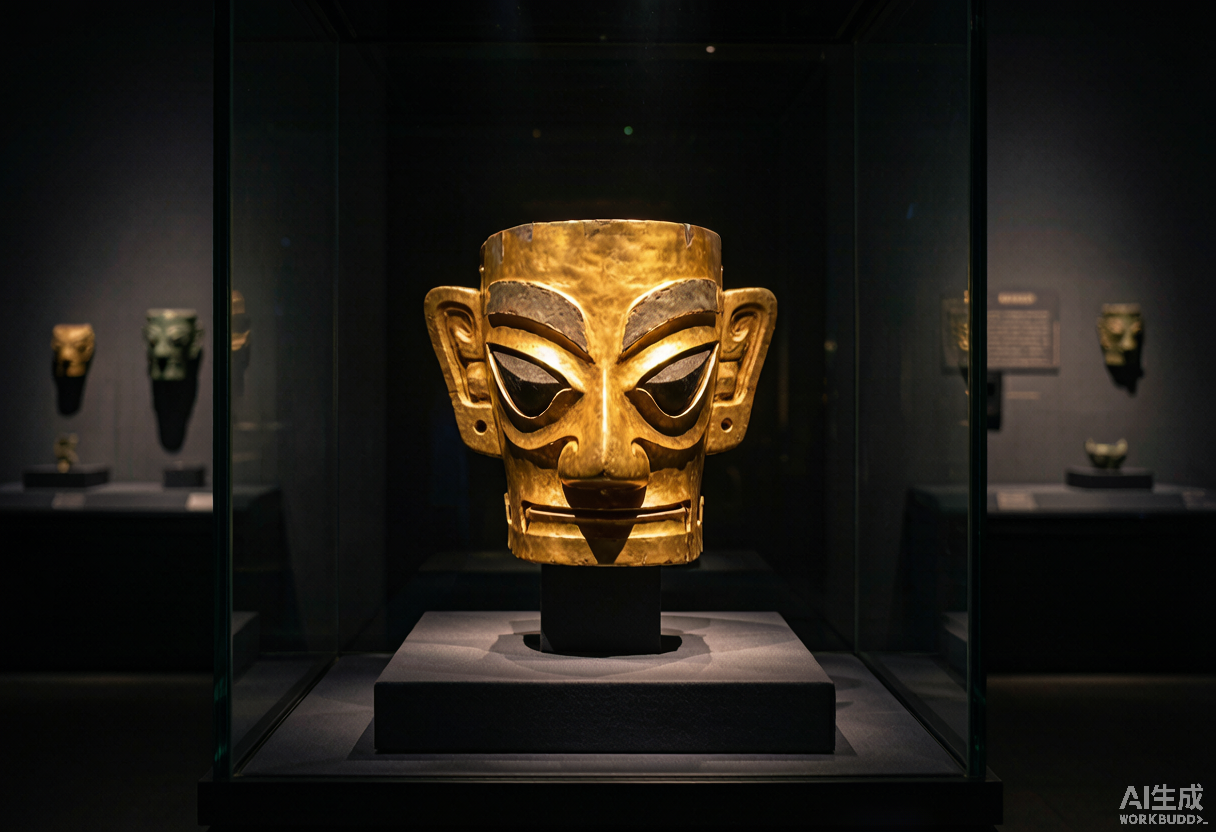
- Giant bronze masks with protruding eyes — nothing else in China looks like them
- The gold sceptre and bronze sacred tree are world-famous finds
- A lost civilisation that left no writing — only its bronzes
- The new museum campus (opened 2023) is a destination building in itself
What to look for
The iconic bronze masks with protruding cylindrical eyes are the signature find — theories range from ancient telescopes to shamanic trance, and none is proven. The bronze sacred tree, nearly four metres tall, is a stunning feat of casting. The gold sceptre, wrapped in beaten gold foil, hints at a king no one has yet identified. The new museum displays these in dramatic, immersive galleries.
Plan your visit
The new Sanxingdui Museum campus is huge and deserves a full morning. From Chengdu, allow 90 minutes each way. The site itself is still being excavated — a working dig you can watch from a distance. For anyone interested in ancient China, this is unmissable: it rewrites what you thought you knew about Chinese civilisation.
Getting there
- Metro Line 3 towards Chengdu Panda Base, then a dedicated shuttle or taxi; alternatively join a day tour from Chengdu
- Era
- Bronze Age, ~1200–1000 BCE
- People
- Unknown — no written records
- Signature
- Bronze masks with protruding eyes