
Why go
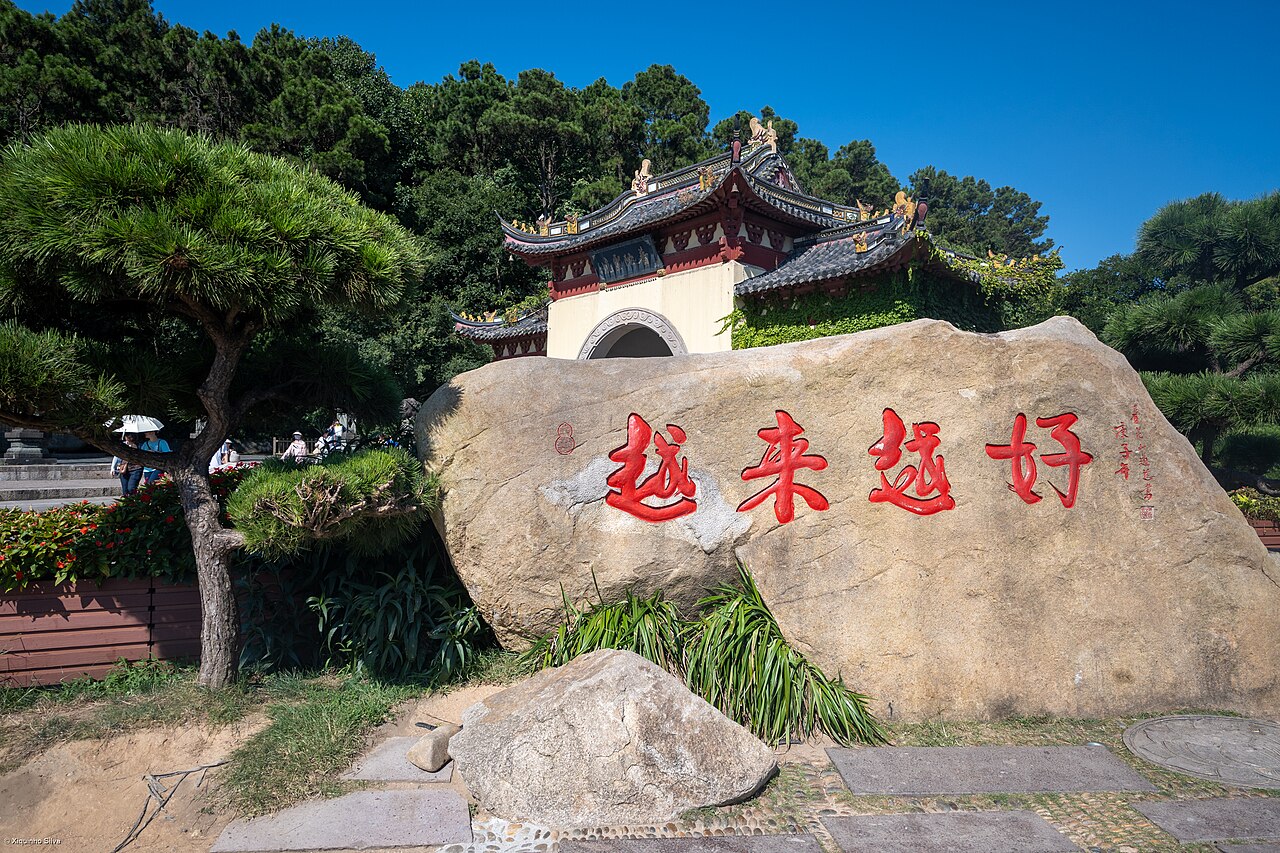
Putuo's temples are built into hillsides and coves around a 290-metre peak, connected by stone steps and shaded paths. Pilgrims in yellow sashes come from all over China to burn incense at Puji, Fayu and Huiji temples, and the island keeps a genuinely devotional atmosphere despite the tourist traffic.
The island is small enough to cover the main sites in one long day, but staying overnight is worthwhile — most day-trippers leave on the 4 pm ferries and the island becomes quiet, with monastic chanting drifting over the harbourside at dusk.
- The 33-metre bronze Guanyin of the South Sea statue facing the open ocean
- Puji Temple in the island's main town — oldest and most important of the three grand temples
- Hike the forest trail from Fayu Temple to Huiji Temple on the summit instead of taking the bus
- Hundred-Step Beach (Baibu Sha) for sunrise over the East China Sea
Practical tips
Island buses connect the main temples for ¥5–10 per ride — useful for the return legs. Incense is included with some temple tickets; outside vendors overcharge. Bring cash for small stalls, and note that the last ferries back to the mainland fill up on weekends.
Nearby
The Zhoushan archipelago has quieter islands nearby, and Ningbo puts you within reach of the seafood stalls of Shenjiamen. Hangzhou and West Lake are two hours inland from Ningbo.
What to See — Aug 2026 Picks
Mount Putuo is one of China's four sacred Buddhist mountains — an island in the Zhoushan archipelago that has been the bodhimanda of Guanyin, the goddess of mercy, for over a thousand years. There are no cars on the island, just shuttle buses, walking trails and temples.
The pilgrimage loop is simple: the three great temples (Puji, Fayu, Huiji on the summit), the 33-metre sea-facing Guanyin statue, and the coastal trails around the bamboo groves. If you have time, add a half-day boat to Luojia Mountain, a small island offshore known as the 'Reclining Buddha on the Sea' — locals say a Putuo pilgrimage is not complete without it.
Nanhai Guanyin Statue
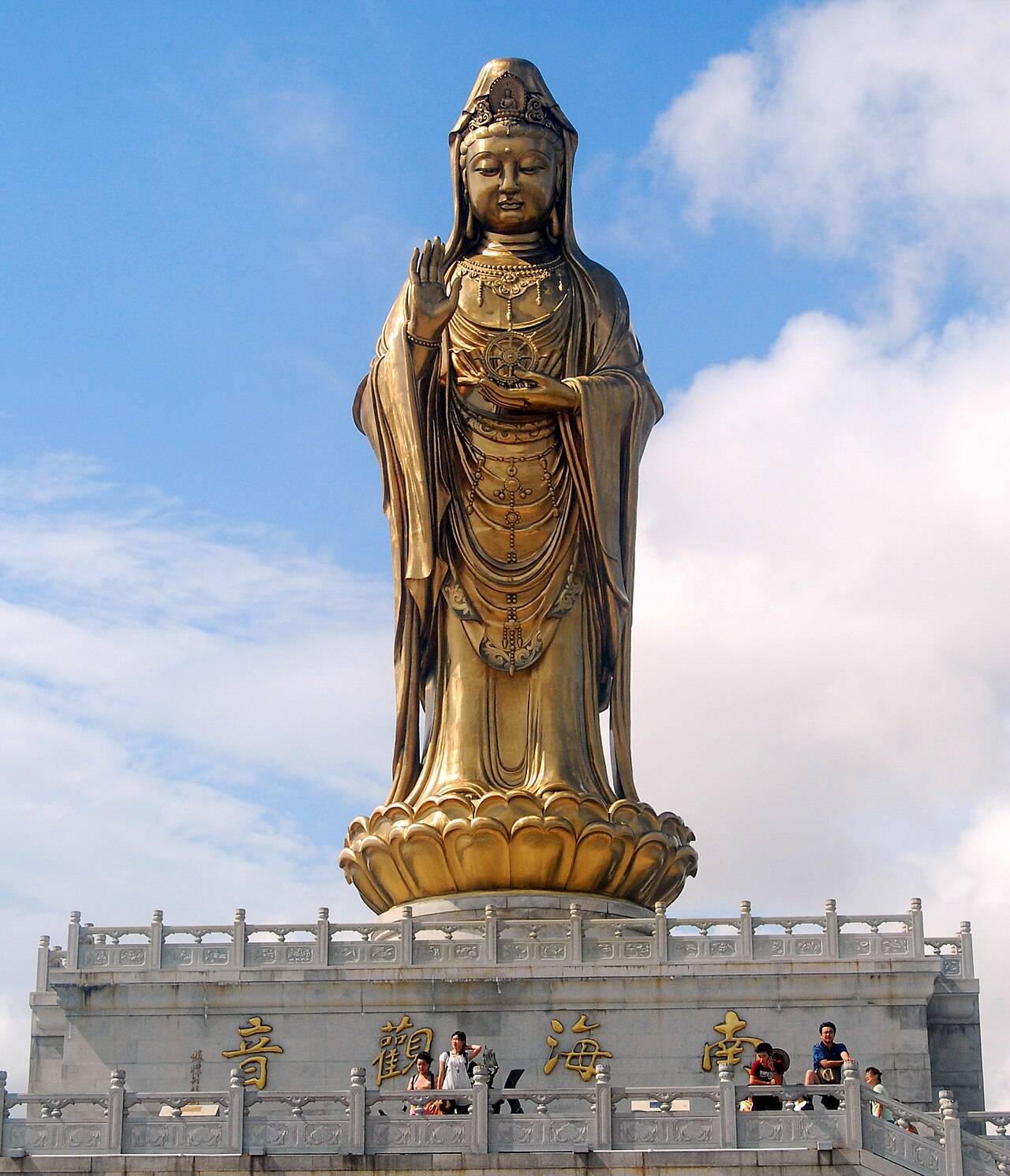
The 33-metre bronze statue of Guanyin facing the East China Sea is the island's landmark and its most photographed sight. Built in 1997 with a face plated in gold, it is deliberately taller than the statue of the Buddha at Lingshan — a subtle nod to Guanyin's status here.
At 19:00–21:00 the statue is floodlit gold against the dark sea — the most dramatic night photo on the island. In the morning, arrive at 7:00 before the first tour boats to have the plaza to yourself.
Puji Temple (Puji Chansi)
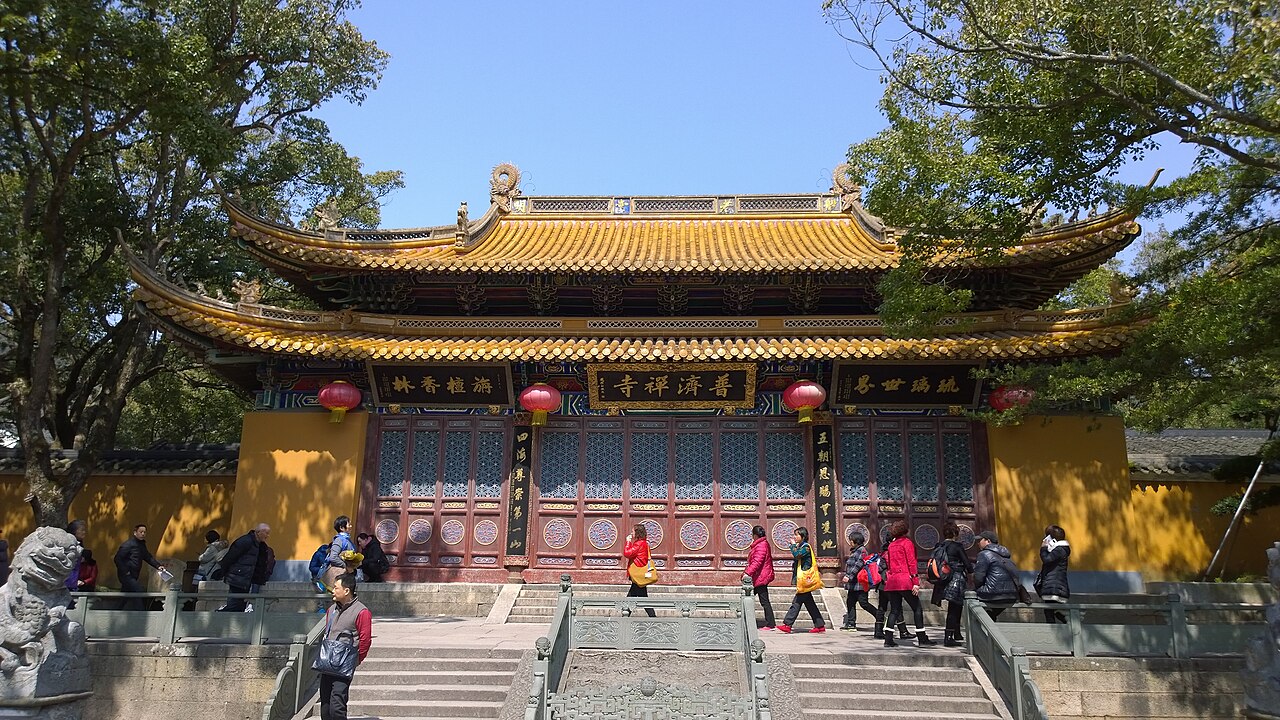
The 'Front Temple' and the island's spiritual heart, founded in the 10th century. The main hall, Yuantong Hall, houses a golden Pilu Guanyin statue, and local custom is to make one wish under the ancient camphor tree in front of it.
Outside, the Haiyin Pond (Sea Seal Pond) is famous for its lotus flowers in summer and for the moonlit 'Lotus Pond Moonlight' scene, one of Putuo's classic twelve views. The nearby Multi-treasure Pagoda is the oldest structure on the island. Vegetarian meal about 10 yuan — arrive before 11:00.
Fayu Temple (Fayu Chansi)
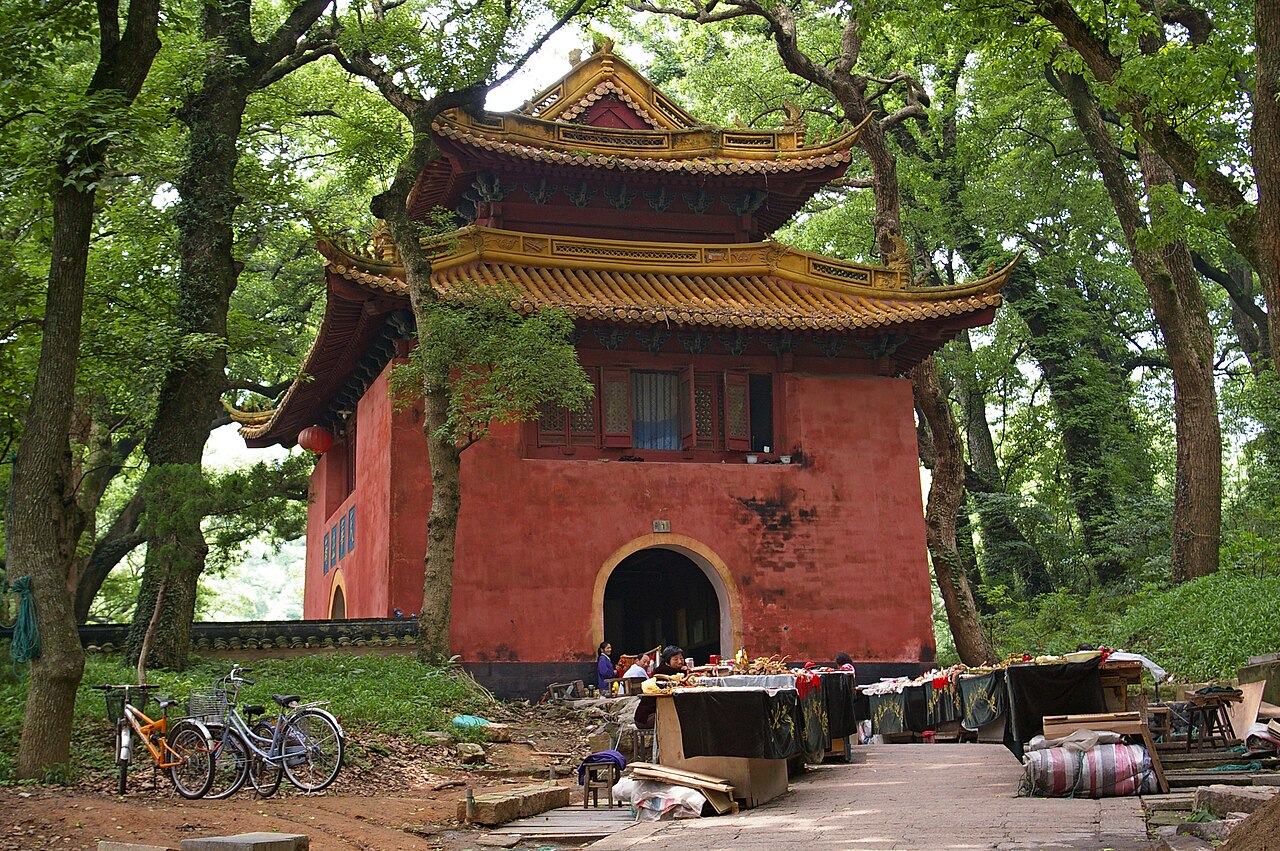
The 'Rear Temple', grander and quieter than Puji. Its centrepiece is the Nine-Dragon Hall, whose coffered ceiling is carved with nine entwined dragons — one of Putuo's three treasures — and whose glazed tiles were reportedly relocated from the Ming-dynasty palace in Nanjing.
Set against a forested hillside with cascading courtyards, it is the most photogenic temple on the island and far less crowded than Puji. Try the 5-yuan vegetarian meal; it starts early (from about 10:30) and queues fast.
Foding Mountain & Huiji Temple
The summit of Putuo at about 290 metres, crowned by Huiji Temple — the island's highest temple, small, calm and famous among pilgrims for blessing requests for children.
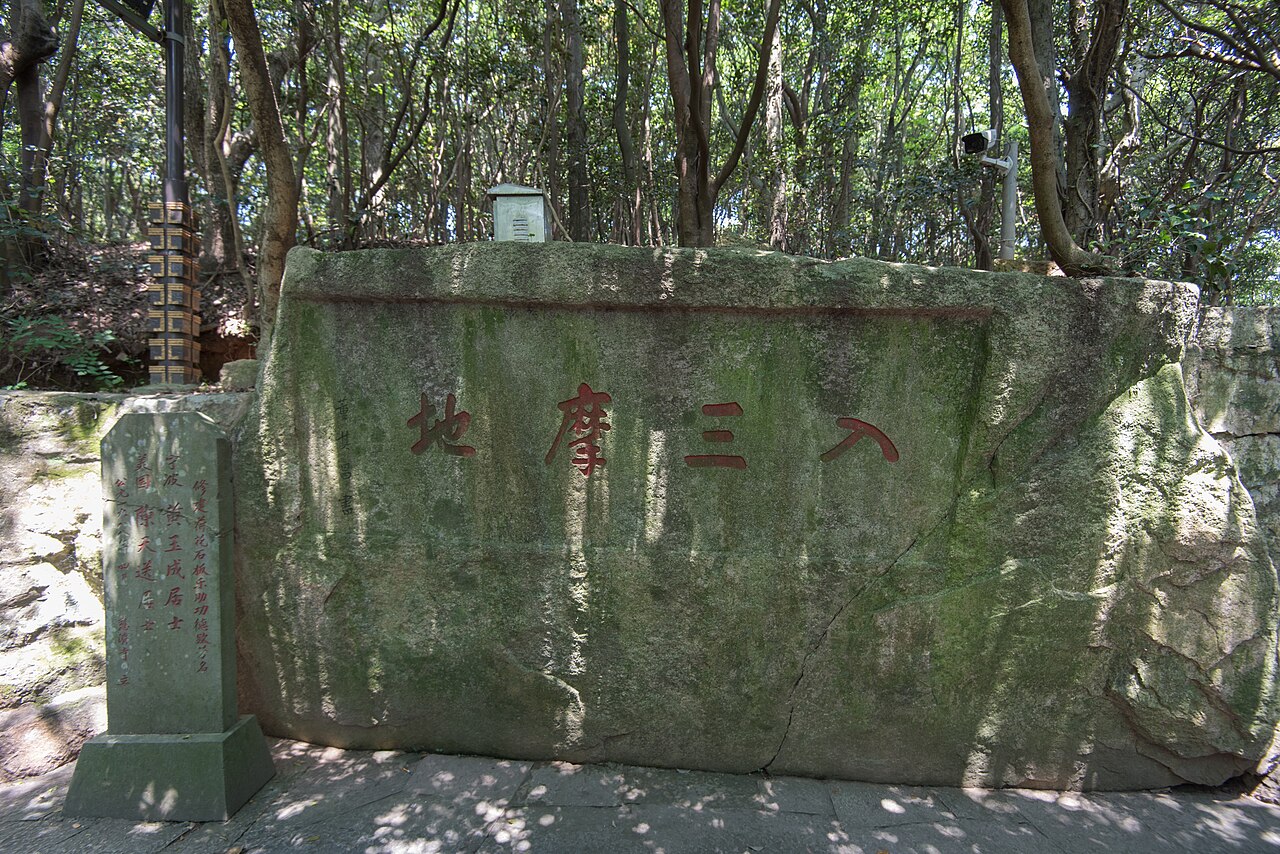
Get up by cable car (40 yuan one-way, 70 round) or earn it the pilgrim way: climb the 1,088 stone steps of Xiangyun Road, where the giant 'Sea and Sky Buddha Land' inscription appears at the halfway point. The walk is said to rid you of 1,088 kinds of troubles. From the temple terrace you can see the whole island and the sea beyond.
Purple Bamboo Grove, Bukengqu Guanyin Temple & Chaoyin Cave
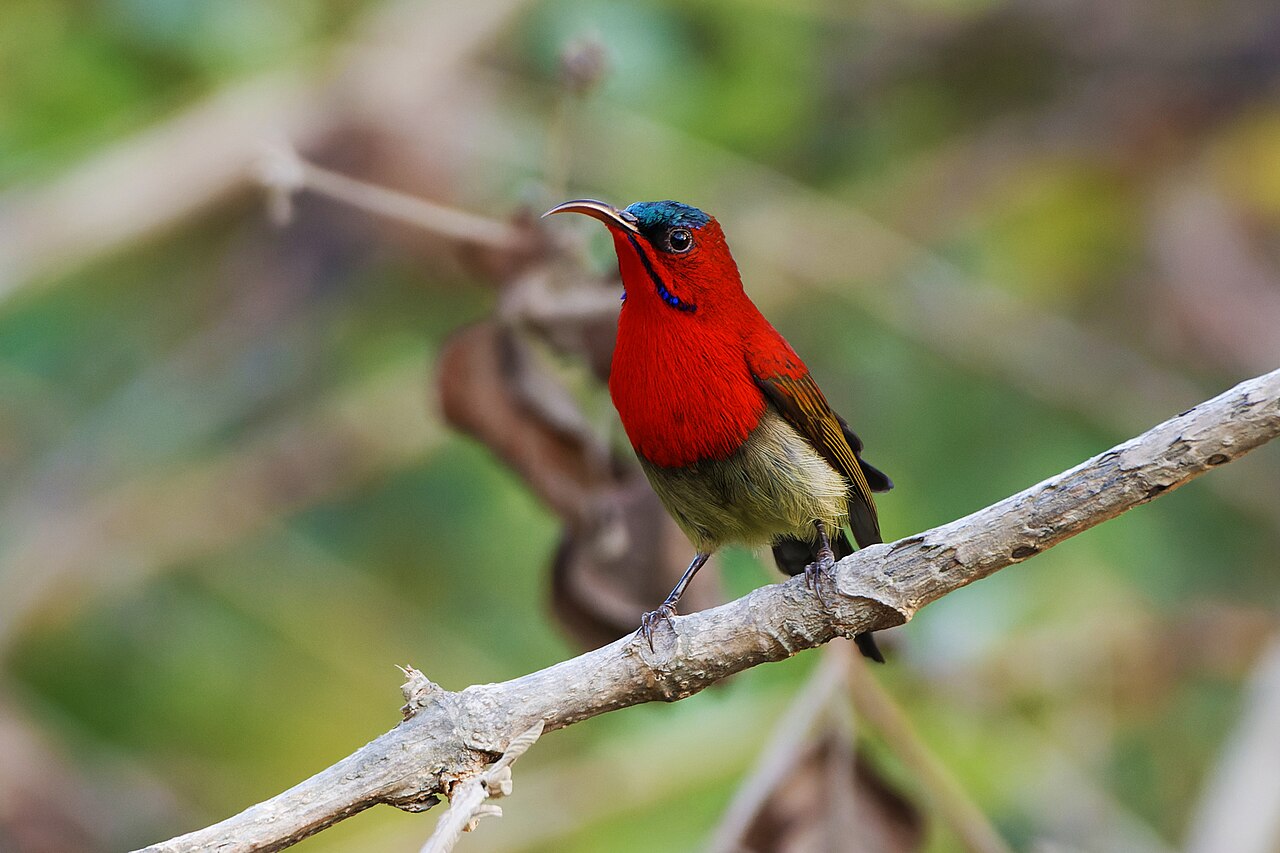
The origin point of Putuo's legend: a Japanese monk named Hui'e tried to carry a Guanyin statue back to Japan in the 9th century, but his boat refused to move past this shore. He built a tiny shrine for it, the 'Refusing-to-Go Guanyin Temple', and Putuo's history as a sacred island began.
Next door, Chaoyin Cave (Tide Sound Cave) is where the surf roars through a sea cave — pilgrims say the sound is like monks chanting. A wooden boardwalk runs along the cliff edge, one of the most beautiful walks on the island.
Western Heaven Scenic Area & Pantuo Stone
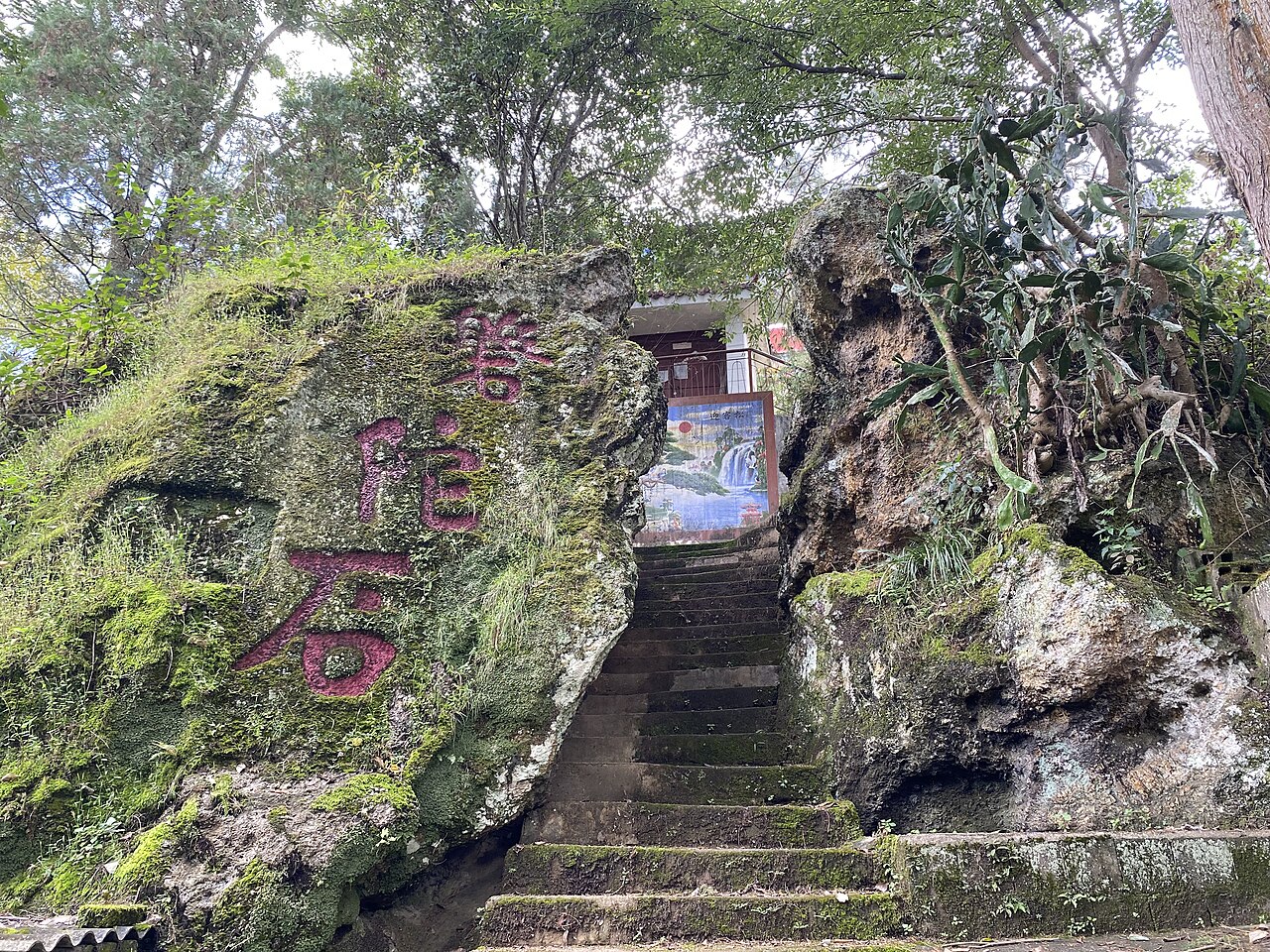
The hill west of Puji Temple holds Putuo's most famous natural oddity: Pantuo Stone, a huge boulder that looks like it is about to roll off its base but has sat unmoved for centuries. It is the island's classic photo spot and a symbol of stability.
The same loop takes in the giant heart-shaped Heart Stone and the Two Turtles Listening to the Dharma rock — all within a pleasant 1–2 hour walk through bamboo forest. Most tour groups skip it, so it stays quiet.
Two August realities rule Putuo. First, since 2026 all ferry tickets require real-name online booking through the official 'Putuo Yimatong' mini-program — walk-up tickets are basically gone, and the peak-season island ticket + return ferry combo is about 220 yuan. Book 3–5 days ahead. Second, August is typhoon season: in 2026 alone ferries were suspended by Typhoon Bavi (9 Jul) and Typhoon White Dolphin (6–7 Aug, gusts to force 11 and a one-day island closure), so check the Zhoushan shipping notice daily and keep 2–3 days of flexibility in your plan. Late August is also near the mid-autumn Guanyin incense dates, when pilgrims flood the island — visit temples at opening (6:00) to dodge both crowds and midday heat.
Getting there
- Bus or train to Ningbo, then bus to Zhujiajian Wugongzhi wharf (~1.5 hr) and fast ferry to the island (10 min)
- Direct ferries also run from Shanghai's Wusong wharf on some dates (~4 hr overnight)
- Elevation
- 290 m (Buddha Peak)
- Sacred status
- One of China's four Buddhist mountains, dedicated to Guanyin
- Area
- 12.5 km² island