
Why go
Xinchang's history is written in salt: it grew as a Song-dynasty salt distribution centre, and the old names — 'new field', 'stone-bamboo lane' — record that industry. When the sea receded and the salt trade faded, the town simply settled into being a quiet market for the surrounding Nanhui farmland.
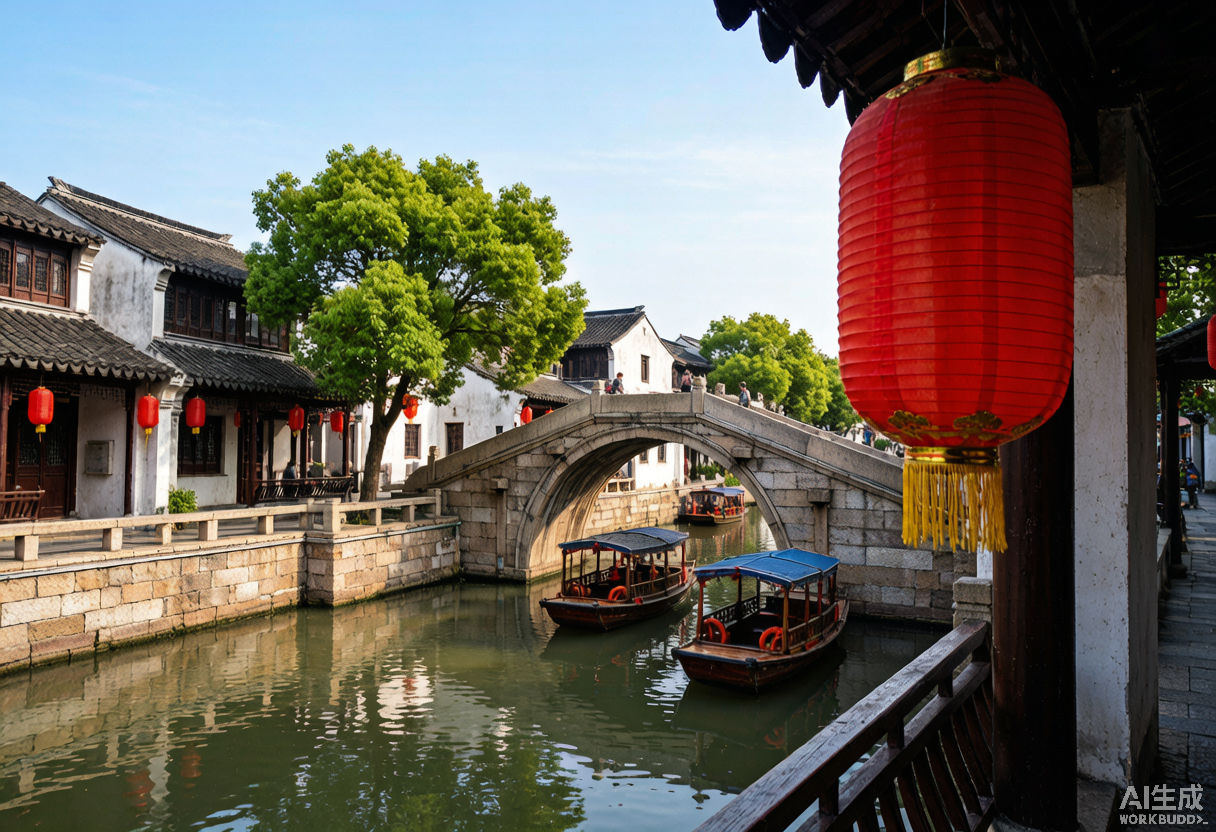
The town is compact: one main street running parallel to the canal, side lanes opening into courtyards, and bridges every hundred metres. Development has been slow and careful, which means many houses are still lived in rather than converted to shops. Period-film crews have repeatedly chosen its streets as backdrops.
- The unhurried old street and its dozen-plus surviving stone bridges
- Hongfu Bridge and the canal views around the north gate
- Ming and Qing merchant houses with carved wooden details
- The ancient Nanshan Temple, a working Buddhist temple by the canal
Where to go
Walk the main street from the north entrance to Hongfu Bridge, then cut through the side lanes to the canal and follow it to Nanshan Temple. The southern section of the old street is the least commercialised. The whole loop takes about two hours at a stroll.
What to eat
The street is strong on cheap snacks: braised pork rice, oil-mound fried dough, pan-fried buns and sweet rice drinks. The area around the town is famous for its peaches — in July, roadside stalls sell them by the crate. Restaurants are simple and local, not aimed at tourists.
Getting there
- Metro Line 16 to Xinchang station, then a 10-min taxi or bus
- Age
- Song-dynasty origins
- Origins
- Coastal salt town
- From Shanghai
- ~1h by metro